Wire harness pricing and delivery depend on routing complexity, connector count, cable lengths, and material choices. A clear RFQ with exact drawings and tolerances reduces errors, shortens lead times, and allows fair comparison of quotes from multiple suppliers.
- Cost and lead time are driven by routing complexity, connector count, cable lengths, and material selections.
- A detailed RFQ with drawings, BOM, and tolerances reduces errors and shortens quoting and production cycles.
- Fair quote comparison requires the same scope, materials, and delivery terms across all bidders.
- Early involvement of the harness design team prevents late changes that inflate cost and delay delivery.
What drives the price of a wire harness?
The cost of a wire harness is not set by a single variable. It is the result of many decisions made during the wire harness design phase. A harness that looks simple on a sketch can become expensive once routing, termination, and testing are defined.
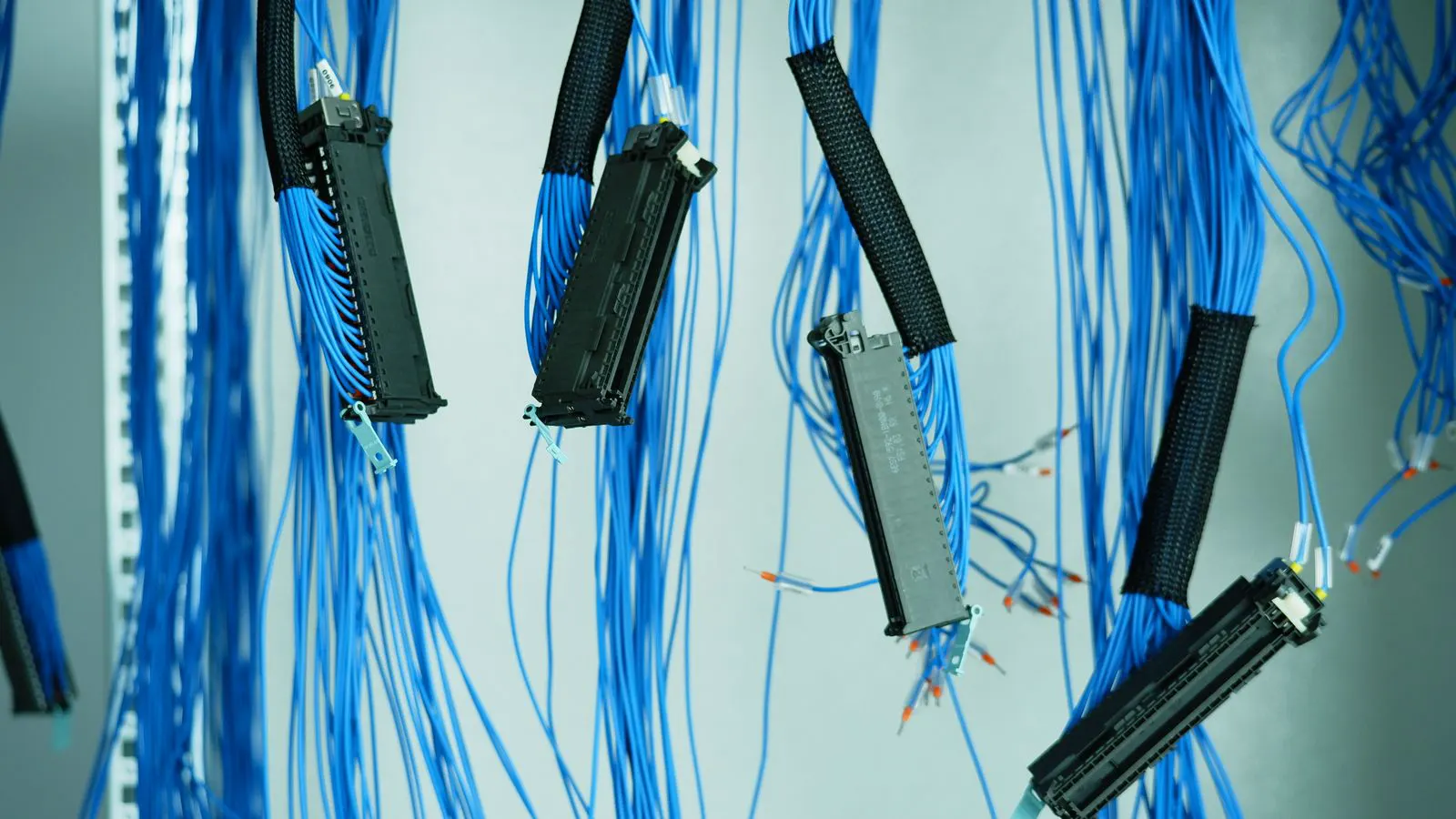
The biggest cost drivers are the number of wires, the length of each wire, the type of connectors, and the complexity of the cable assembly layout. A harness with ten short wires and two standard connectors will cost far less than one with fifty long wires, custom molded connectors, and multiple branching points.
Material choice also affects price. Standard PVC-insulated wires are the most common and most economical. Higher-temperature or fire-retardant materials cost more. Shielded cables add cost. Heavy-duty cables for automotive or industrial power applications are more expensive than signal-grade wires.
The amount of labor is another major factor. A harness that requires hand-termination, custom crimping, or special tooling will take longer to build. The more complex the harness routing, the more time a technician spends on the bench.
How does harness routing affect cost and delivery?
Harness routing determines how wires are arranged, supported, and protected within the assembly. It also defines the length of each wire and the order of operations during production.
Poor routing causes excess wire length. Extra wire is waste. It increases material cost and can complicate the harness routing process. It can also make the bundle harder to test and more difficult to service.
Good routing reduces wire length to the minimum required for function and compliance. This lowers material cost and shortens assembly time. It also improves the reliability of the cable assembly layout because wires are less likely to chafe or kink.
Routing also affects the choice of supports. A harness that must pass through a tight panel may need grommets, clamps, or custom brackets. Each added component adds cost and time. If the routing changes after the harness is designed, the supplier may need to re-cut wires, re-terminate connectors, and re-test the assembly.
How does cable assembly layout impact the final price?
The cable assembly layout is the physical arrangement of wires, connectors, and supports. It is the blueprint for production. A clear layout tells the manufacturer exactly where each wire goes, which connector it terminates into, and how the bundle is secured.
When the layout is ambiguous, the supplier must make assumptions. Assumptions lead to questions. Questions lead to delays. Delays increase cost because the supplier cannot begin production until the design is confirmed.
A well-defined cable assembly layout reduces errors. It allows the supplier to build the harness in the most efficient sequence. It also makes it easier to identify problems before production begins.
The layout must account for bend radius, strain relief, and connector orientation. A connector that must face a specific direction may require a different termination method or a different wire length. These details are often missed in an early RFQ and discovered late in the production process.
How to write a clear RFQ for better quotes
A Request for Quotation, or RFQ, is the first document that turns a design into a commercial transaction. A clear RFQ reduces the number of back-and-forth exchanges between buyer and supplier.
Start with a complete bill of materials. List every wire, connector, terminal, and support. Include part numbers where possible. If part numbers are not available, provide detailed specifications. Include wire gauge, insulation type, color code, and length.
Include drawings. A 3D model or a detailed 2D drawing is better than a verbal description. The drawing should show the cable assembly layout, the harness routing, and the connector positions. It should also indicate tolerances for connector orientation and wire length.
State the quantity. A quote for a prototype is different from a quote for a production run. Volume affects tooling cost and unit price. If the quantity is not known, provide an expected range and state that the price will be confirmed once volume is set.
Specify testing requirements. Some harnesses require continuity testing, insulation resistance testing, or functional testing. Each test adds time and cost. If the harness must pass a specific test, include the test procedure in the RFQ.
How to compare quotes fairly
Receiving multiple quotes is a standard part of the buying process. Comparing them fairly requires looking at the same scope of work. A lower price is not always a better price.
Check that each quote includes the same materials. One supplier may use a standard connector while another uses a premium version. The connector cost difference can be significant.
Check the labor assumptions. One quote may assume a simple hand-termination process. Another may assume a custom jig is required. The labor cost difference can be hidden in the unit price.
Check the delivery terms. One quote may include packaging, labeling, and testing. Another may exclude these items. The total landed cost can differ even if the unit price is the same.
Check the lead time. A shorter lead time may cost more because it requires the supplier to prioritize your order over others. A longer lead time may be acceptable if your production schedule allows it.
| Cost Driver | How It Affects Price and Lead Time |
|---|---|
| Wire length and count | More wires and longer runs increase material cost and assembly time |
| Connector type and quantity | Premium or custom connectors increase cost and may require special tooling |
| Routing complexity | Tight or multi-point routing increases labor and support component cost |
| Cable assembly layout clarity | Ambiguous layouts cause delays and rework |
| Testing requirements | Each test adds time and cost to the production process |
| Quantity and tooling | Low quantities increase unit cost; custom tooling adds upfront cost |
| Material specifications | High-temperature, shielded, or fire-retardant materials cost more |
How lead time is determined
Lead time is the period from order placement to delivery. It is not a single number. It is made up of several stages.
The first stage is design review. The supplier checks the drawings and specifications. If anything is unclear, the supplier asks questions. The faster the buyer responds, the shorter this stage takes.
The second stage is material procurement. The supplier orders wires, connectors, and supports. Lead time varies by item. Standard connectors are often in stock. Custom molded connectors may take weeks or months to produce.
The third stage is assembly. The harness is cut, stripped, terminated, and routed. The time required depends on complexity. A simple harness can be assembled quickly. A complex harness with many branching points takes longer.
The fourth stage is testing. The harness is tested for continuity and insulation. Failed harnesses are reworked. The first-pass yield rate affects the total lead time.
The fifth stage is packaging and shipping. This stage is usually short. However, if the supplier must produce custom labels or packaging, this stage can add time.
How to reduce cost and lead time
The most effective way to reduce cost and lead time is to finalize the design before issuing the RFQ. Changes made after quoting are expensive. They require re-cutting wires, re-terminating connectors, and re-testing the assembly.
Work with the supplier early. A good supplier will review your wire harness design and point out problems before production begins. They may suggest a simpler routing or a standard connector that performs the same function at a lower cost.
Avoid over-specification. If a high-temperature wire is not required for the operating environment, use a standard wire. If a shielded cable is not needed for the application, remove the shield. Every unnecessary specification adds cost.
Standardize components where possible. Using the same connector type across multiple harnesses reduces tooling cost and simplifies inventory. It also speeds up assembly because the same tooling can be used for multiple jobs.
Document the cable assembly layout clearly. A single drawing that shows every wire, connector, and support is worth more than a long list of part numbers. It reduces ambiguity and speeds up production.
Common mistakes that inflate cost
The most common mistake is issuing an incomplete RFQ. A buyer who provides only a part number and a quantity expects a quote. The supplier must make assumptions. The quote may be based on a different design than what the buyer intended.
Another mistake is changing the design after the quote is received. If the buyer changes the connector type or the wire length after receiving the quote, the supplier must re-price the job. This delays the project and increases cost.
A third mistake is ignoring the harness routing. A buyer who focuses only on the wire list and connector count may overlook the routing complexity. The routing determines how the harness is built. It can be the biggest driver of labor cost.
A final mistake is not including testing requirements. If the harness must pass a specific test and the supplier does not know it, the test may be missed. The harness may arrive at the buyer’s facility and fail inspection. The cost of rework and expedited shipping is much higher than the cost of specifying the test in the RFQ.
Frequently asked questions
How much does a wire harness typically cost?
Cost varies widely based on wire count, length, connector type, and routing complexity. A simple signal harness with a few wires and standard connectors costs less than a complex power harness with heavy-duty cables and custom connectors.
What is the shortest possible lead time for a harness?
Lead time depends on material availability and production capacity. A small batch of a simple harness with standard parts can be produced quickly. A large batch with custom molded connectors or special materials takes longer.
Can I get a quote without full drawings?
Some suppliers will provide a rough estimate with basic specifications. However, without detailed drawings and a complete bill of materials, the quote is likely to be inaccurate. The final price may change once the design is confirmed.
How do I reduce the cost of my wire harness?
Review your specifications for over-engineering. Use standard connectors and wires where possible. Simplify the harness routing to reduce wire length and labor. Work with the supplier early to identify cost-saving options.
What happens if I change the design after I place the order?
Changes after order placement require rework. The supplier must stop production, re-cut wires, re-terminate connectors, and re-test the assembly. This increases cost and extends lead time.